Rental car roadside help: a breakdown, a flat tire or lost keys?
Separate emergency help, authorized repairs and financial responsibility when a rental has a breakdown, puncture or missing keys.

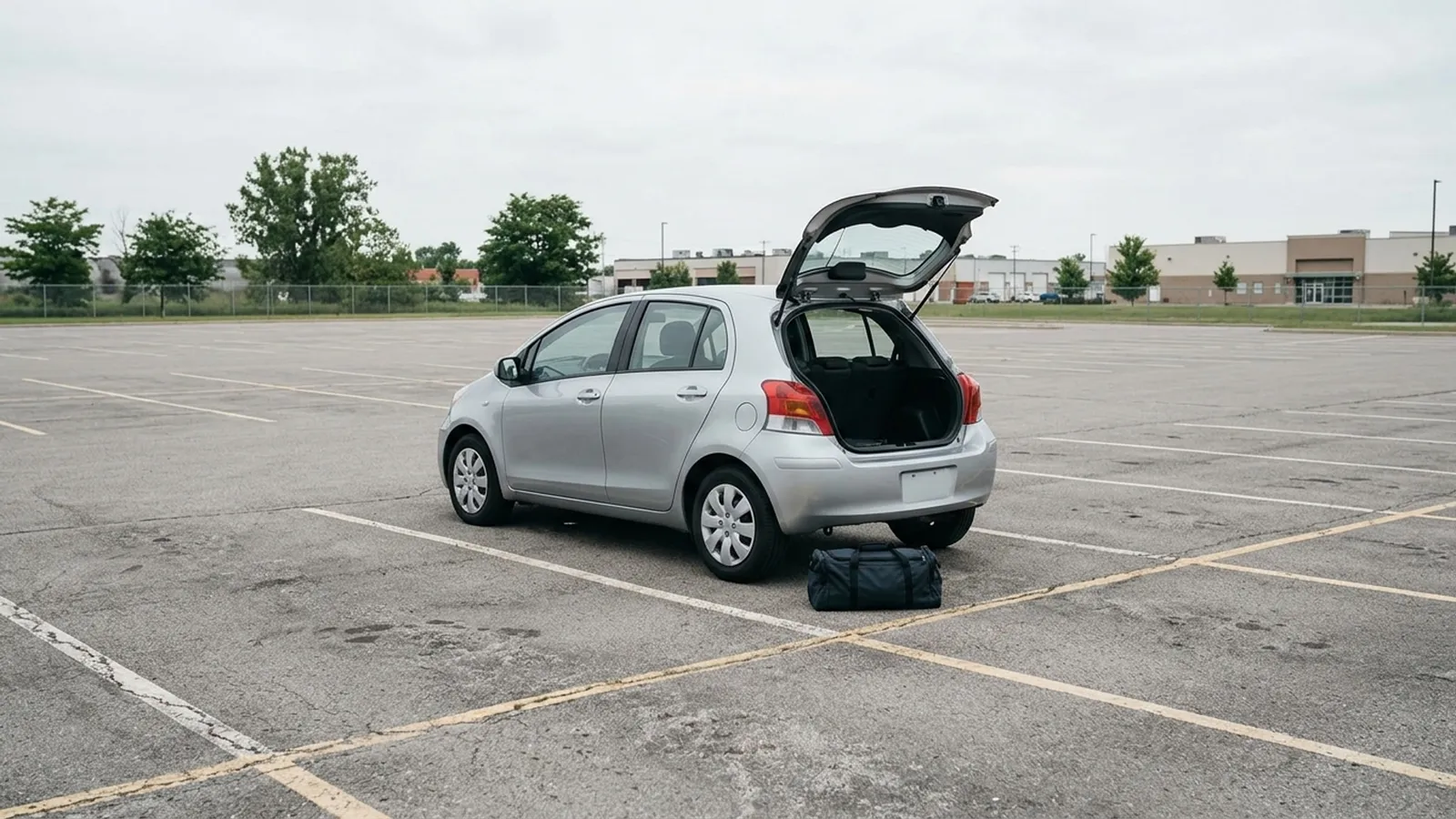
A rental car has stopped, a tire is flat or the keys are locked inside. Getting help and knowing who pays for that help are two separate questions. The fact that a company offers roadside assistance does not, by itself, tell you which costs your rental includes.
This guide is a way to organize the conversation with the rental company. It does not determine coverage under an individual rental agreement, insurance policy or card benefit, and it is not a set of vehicle-repair instructions.
Deal with the immediate situation first
If there is danger, injury or an unsafe traffic situation, use the appropriate local emergency service. For an undrivable mechanical breakdown, Enterprise’s instructions begin with reaching a safe location away from traffic and contacting its roadside-assistance service. (Enterprise breakdown FAQ, checked November 17, 2026.)
Use the current contact route in your rental agreement, the company’s app or its official website. This avoids relying on an old number copied from another rental or a search advertisement for an unrelated recovery company.
Tell the agent where the vehicle is, what has happened and whether anyone is at risk. Distinguish an observation from a diagnosis: “the engine stopped and will not restart” is more useful than guessing which component failed.
Identify the incident before discussing the product
A mechanical failure, a puncture, a lockout and an empty fuel tank are not interchangeable events. A protection product may treat them differently, and a broad product name is not a substitute for its terms.
Enterprise describes its optional Roadside Assistance Protection as waiving financial responsibility for chargeable incidents such as lost keys, lockouts and fuel outages. Its page also says adding the product during a rental requires the car to be inspected at a designated rental location. (Enterprise protection products, checked November 17, 2026.)
That is not a basis for buying protection after an incident and assuming the existing problem disappears. It is a reason to understand the selected products and their conditions before collection.
Ask what is authorized and what is payable
Once immediate safety is addressed, ask the rental company’s agent to explain the next step. Who is arranging the service? Where is the vehicle going? Is a repair being authorized, or only transport to a location where it can be assessed?
Then separate the possible charges. A roadside callout, towing, replacement key, tire, repair and replacement vehicle may be different items. Ask which are included under your agreement and which require a separate decision. Request a reference number and keep the explanation with the rental paperwork.
If you are asked to arrange something yourself, clarify the instructions before committing to a contractor. Ask who approves the work, how payment will be handled and which receipts are needed. A receipt proves an expense occurred; it does not establish that another party agreed to reimburse it.
A flat tire illustrates the distinction
Consider a hypothetical rental where the driver finds a puncture in a hotel parking lot. Four questions remain even after roadside help is available: can the car be driven, who arranges assistance, who authorizes a repair or replacement, and who pays each cost?
The driver calls the rental company’s stated assistance channel, describes the situation and asks for instructions. The useful outcome is an agreed plan, not merely a general statement that the rental has “coverage.”
Do not infer the answer from a different company’s policy or from a waiver bought on a previous trip. The card-coverage exclusions guide explains why the vehicle, country, incident and benefit terms all matter.

Keep the replacement journey in view
If the company sends another car or directs you to a branch, ask how the handover affects the rental agreement. Confirm where the original vehicle and keys must go, how fuel or charge level will be recorded and which return location now applies.
Also check the practical trip: can the replacement carry the travelers and luggage, and is any required equipment available? If the delay changes a hotel arrival or a timed activity, contact that provider separately. Roadside assistance does not organize every downstream reservation.
Before driving away, record the replacement vehicle’s condition through the usual inspection process. Keep photographs and paperwork factual and private. They may help explain which condition belongs to which vehicle without creating a public accusation before the company has reviewed it.
Preserve one coherent record
A simple incident folder can contain the rental agreement, the time and location, the assistance reference, factual photographs, written instructions and receipts. Note whether the agent described a charge as provisional, included or subject to review.
If a bill later contains an unexpected item, compare it with that record and ask the company for the contractual basis and supporting detail. Where a card benefit or insurer might apply, follow that provider’s own reporting process and deadlines. The benefit-administrator guide covers that separate handoff.
Avoid deciding that damage waiver, liability protection and roadside assistance all do the same job. They answer different questions. The damage-waiver guide is the place to examine that particular product.
Common questions
Does roadside assistance mean every callout is free?
Not necessarily. Ask how your agreement treats the actual incident and each charge. Availability of assistance does not settle financial responsibility.
Can I add protection after losing the keys?
Do not assume a new product covers an incident that has already occurred. Enterprise’s published page includes an inspection condition for adding its roadside product during a rental. Ask the company about the existing problem directly.
Should I arrange my own tow or repair?
Use emergency services where safety requires them. For ordinary rental recovery, ask the rental company’s assistance channel what it authorizes before committing to nonemergency work.
Sources checked November 17, 2026: Enterprise breakdown instructions and Enterprise protection products.